
TUFH2026
Keynote Speakers
TUFH2026
Keynote Speakers
Keynote Speaker
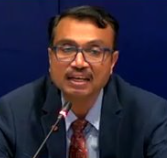
Samir Garg
Health Workforce Policy Expert
Technical Officer – Health Workforce Policy, Regional Office for Western Pacific
World Health Organization
Bayanihan for Health Equity: Co-Creating Social Innovations for Responsive & Resilient Health Systems
Tuesday, August 4, 2026 – 09:00 – 10:00 AM
Biosketch
Samir Garg is a seasoned health workforce and health systems and policy expert currently serving as Technical Officer – Health Workforce Policy at the World Health Organization Regional Office for the Western Pacific, based in Manila. He brings over two decades of experience in health systems strengthening, human resources for health (HRH), and primary health care. He has worked in multiple regions of the WHO. Before joining WHO, Samir was Executive Director at the State Health Resource Centre in Chhattisgarh, India, where he led major initiatives to improve rural health workforce planning and service delivery. He holds a PhD in Health Systems Management. His work has been widely published in international peer-reviewed journals, focusing on health labour market analysis, health workforce policies and equitable access to primary health care. He continues to contribute to regional and global health workforce reform efforts.
Abstract
Bayanihan for Health Equity: Co-Creating Social Innovations for Responsive & Resilient Health Systems
There is no doubt that the health workforce is central to building the health systems that can deliver the services to meet the population’s health needs. The Western Pacific Region has made progress on health workforce development but continues to face many challenges. What are these challenges? What questions do we need to ask to know where our health workforce stands today and in relation to the demands of the future? What strategies have worked or not worked, and why? Is the conventional advice of ‘Train-Recruit-Retain’ sufficient to address the persistent bottlenecks? The keynote presentation tries to raise and address some critical questions and share the regional lessons and the collective priorities on the health workforce.
Keynote Speaker
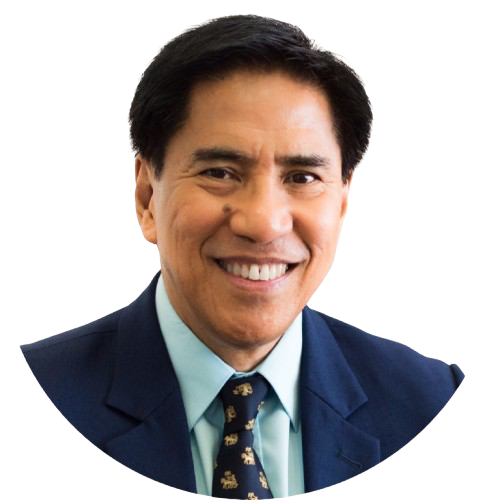
Manuel M. Dayrit
Chair, Zuellig Family Foundation
Senior Research Fellow, Ateneo School of Medicine and Public Health
Community-Driven Health Systems: Strengthening Local Solutions for Sustainable Impact
Biosketch
Dr. Manuel M. Dayrit is one of the Philippines’s leading public health practitioners. He has dedicated his life to improving health care and strengthening the Philippine health system.
Dr. Dayrit was Secretary of Health from 2001 to 2005 when he led the country in preventing the community spread of SARS in 2003, reducing the prices of essential medicines, and widening citizen access to social insurance. Under his leadership, the Department of Health (DOH) was
recognized as one of the country’s top performing government agencies.
He is the current Chairperson of the philanthropic Zuellig Family Foundation https://zuelligfoundation.com/. He is also a Commissioner of the Georgetown-Lancet Commission for Faith, Trust, and Health. https://faithhealthcommission.org/news/
By 2026, his public health career will span 50 years. He has served in government, the NGO sector, the private sector, academia, and WHO. Early on, he established community-based health programs in the rural areas of Davao del Norte and pioneered in the training of community health workers. At the DOH, he was founding Director of the Field Epidemiology Training Program in 1987, directing it for 10 years. At WHO Geneva, he led the Department of Human Resources for Health in developing the WHO Code of Practice on the International Recruitment for Health Personnel. Ratified at the World Health Assembly in 2010, the WHO Code set out ethical principles to mitigate the loss of health workers from poor countries to richer countries. He served as Dean of the Ateneo School of Medicine and Public Health (ASMPH) from 2013 to 2019, overseeing the development of the next generation of health leaders.
He has degrees from the Ateneo de Manila University (Honorable Mention), the University of the Philippines College of Medicine and the London School of Hygiene and Tropical Medicine (Mark of Distinction). He became an Honorary Fellow of the London School in 2006. His other awards include Outstanding Young Scientist of the National Academy of Science and Technology in 1990 and Outstanding Alumnus for Health of the University of the Philippines during its
Centennial Year in 2008.
Dr. Dayrit has co-authored over 50 scientific articles and continues to do research on the implementation of the Universal Health Care Act of 2019 (RA 11223).
Abstract
Strengthening Local Health Governance through Bridging Leadership: Lessons from the Zuellig Family Foundation
The Zuellig Family Foundation acts as a catalyst for health systems transformation through philanthropic investments from the Zuellig family. ZFF aims to strengthen local health governance in the Philippines. Established in 2008, ZFF focused its efforts in training mayors, governors, and public health officers in the governance of their local health systems. This entailed deep exposure into the health realities of communities to change their mindset of doleouts and medical missions to looking for root causes of problems and envisioning systemic reforms. Close to 34,000 officials have been trained in 3,000 local government units (provinces, cities, municipalities) nation-wide over the last 16 years. ZFF graduates have become transformative leaders in their respective areas.
ZFF calls its approach the “Bridging Leadership Change Model”. Proponents are formed to “own, co-own, and co-create” innovative goals and solutions with various partners towards the achievement of targeted health outcomes in their respective jurisdictions. These outcomes have included better access to health services and the reduction of stunting in children, child/adolescent pregnancy, infant mortality, and maternal mortality.
Concretely, the bridging leader works within and beyond the health sector to mobilize inputs and support from partners in local and national government, civil society, and international development agencies, among others. The bridging leader — who are the governors, mayors, provincial, city, and municipal health officers — thus become the drivers for the transformation of the local health system towards sustainable health services and health outcomes for their constituents.
Keynote Speaker
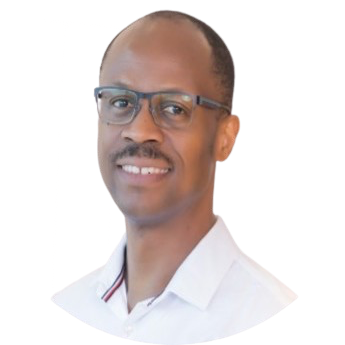
Kenneth Yakubu
Family physician in Nigeria
Research Fellow at The George Institute for Global Health
Strengthening the Global Health Workforce: Recruitment, Retention, Capacity-building, and Support in Underserved Communities
Biosketch
Dr Kenneth Yakubu trained as a family physician in Nigeria and completed an MPhil in Family Medicine at Stellenbosch University, South Africa, followed by a PhD at the University of New South Wales, Australia. His doctoral research examined governance systems for skilled health worker migration, exploring how they incorporate human rights norms and enable more equitable global health workforce distribution. The study drew on social constructivism, social network science, and critical realism.
He is currently a Research Fellow at The George Institute for Global Health, working within the Guunu-Maana (Heal) Aboriginal and Torres Strait Islander Health Program and the Implementation Research for Health Equity Program. He also co-leads the Institute’s Ubuntu Initiative, which strengthens partnerships with African researchers, institutions, and communities.
Dr Yakubu’s research and advocacy centre on advancing global health equity grounded in local knowledge and community perspectives.
Abstract
Globalisation has connected economies, people, and ideas more than ever before. Technology and travel make it easier for health workers to move, share knowledge, and seek opportunity. Yet this mobility also creates uneven access to care, as communities loose or gain workers depending on shifting global labour dynamics.
Health services cannot be governed only by the market rules of supply and demand. They must also reflect human rights principles grounded in the dignity and worth of every person. The right to health, for instance, has helped dismantle long-standing barriers to access, most notably through expanded HIV treatment in many African countries. Its potential to ensure that all communities, regardless of income or geography, have access to health workers remains underexplored.
However, equitable access cannot rest on legal frameworks alone. Evidence suggests that shared identity, social solidarity, and trust between communities, health workers, and governments shape whether workers stay, thrive, and continue to serve. These relationships are the foundation of local innovation, where support, training, and retention are co-created and sustained.
This keynote address explores how social innovation and human rights can work together to strengthen the health workforce in underserved settings. Drawing on health systems science and social justice perspectives, it argues for an approach that recognises both structural forces and human agency. By aligning international rights frameworks with community-led action, new pathways can emerge for building a workforce that is responsive, resilient, and rooted in the communities it serves.
Keynote Speaker
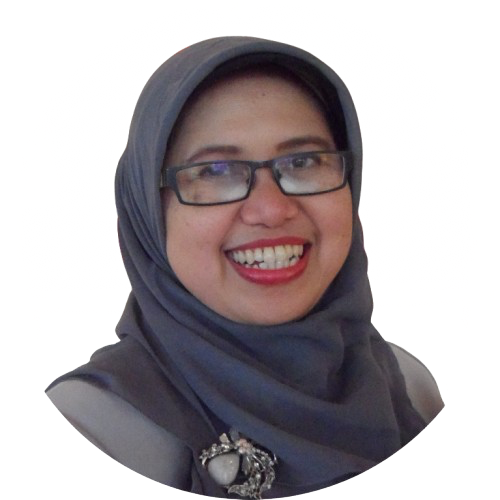
Titi Savitri Prihatiningsih
Professor in Medical Education and Bioethics – UGM, Indonesia
President South East Asia Regional Association of Medical Education
From Policy to Practice: Exploring Barriers and Enablers through Local Partnerships
Biosketch
Prof Dr. Titi Savitri Prihatiningsih, MA, MMedEd, PhD
Professor in Medical Education and Bioethics at the Department of Medical Education and Bioethics, Faculty of Medicine – Public Health and Nursing, Universitas Gadjah Mada, Yogyakarta, Indonesia.
She is currently the President of South East Asia Regional Association of Medical Education (SEARAME) from 2018-2025 and Member of the World Federation of Medical Education (WFME) Executive Council from 2018-2025 . She has been involved in medical education development since 1988. Her main interest is in curriculum development, quality assurance and medical education regulation. She is a leading figure in medical education in Indonesia.
She served as the secretary to the Indonesian Association of Medical Schools from 2003-2011 and she started the Indonesian Journal of Medical Education, she chaired the national working group to formulate Standards of Medical Doctors and Standards of Professional Education for Medical Doctors in Indonesia in 2004-2006 and 2017-2020. She was also involved in the development of ASEAN University Network for Quality Assurance (AUNQA) Guidelines for External Quality Assessment at Programme Level (2005-2012) and served as member of AUNQA Executive Committee from 2013-2017. She was the member of National Board of Educational Standards under the Ministry of Research, Technology and Higher Education from 2014-2019. She has been the International Team of Indonesian Accreditation Agency for Higher Education in Health (IAAHEH) (2015-now) and she has been instrumental in preparing IAAHEH moving to qualitative instruments. She is member of International Social Accountability and Accreditation Think Tank (ISATT) (2021-now).
At her institution, she initiated the Department of Medical Education and Masters Programme in Medical Education – the first in Indonesia – in 2006. She was the chair of Curriculum Team (2005-2008). She was the Director of NPT Project – A collaborative Project between Faculty of Medicine UGM and Maastricht Medical School and Groningen Medical School. She also served as the Vice Dean for Academic Affairs and then the Dean from 2008-2012. At the national level, she chaired the Educational Division of Indonesian Medical Association and she was the Chair of the Education Division of Indonesian Association of Medical Education Institution (AIPKI). Currently She is the Vice Chair of College of Medicine Indonesia (2025-2028) and Indonesian Delegate Member of ASEAN Joint Coordinating Committee for Medical Practitioner (2025).
She has published around 100 scientific articles and books nationally and internationally.
Areas of expertise: curriculum development dan quality assurance in health profession education, social accountability and accreditation
Abstract
Policies in medical and health professions education are designed to strengthen workforce quality, ensure patient safety, and respond to evolving health system needs. It is commonly understood that policy formulation, which prioritizes the public interest and social accountability, is a challenging political process; it often encounters conflicting pressures from multiple forces of interest, especially in developing and underdeveloped countries, where political and governance systems are fragile. Once the regulation is promulgated, the next challenge lies in its implementation. Translating these policies into effective educational and service practices remains a complex task. This keynote explores the gap between policy intent and implementation, focusing on the role of local partnerships as key determinants of success. Using perspectives from health systems strengthening and health professions education, this study examines the common barriers to policy implementation, including fragmented governance, misalignment between educational institutions and service settings, limited implementation capacity, and contextual constraints such as conflicting interests among key stakeholders. These challenges are contrasted with enabling factors such as well-grounded champions, community-based mutual cooperation, shared accountability, leadership engagement, and meaningful involvement of local leaders and stakeholders. Success stories from local to national contexts are shared.
Keywords: policy formulation, policy implementation, enabling factors, leadership