
TUFH2026
Themes
TUFH2026
Themes
Bayanihan for Health Equity: Co-Creating Social Innovations for Responsive & Resilient Health Systems
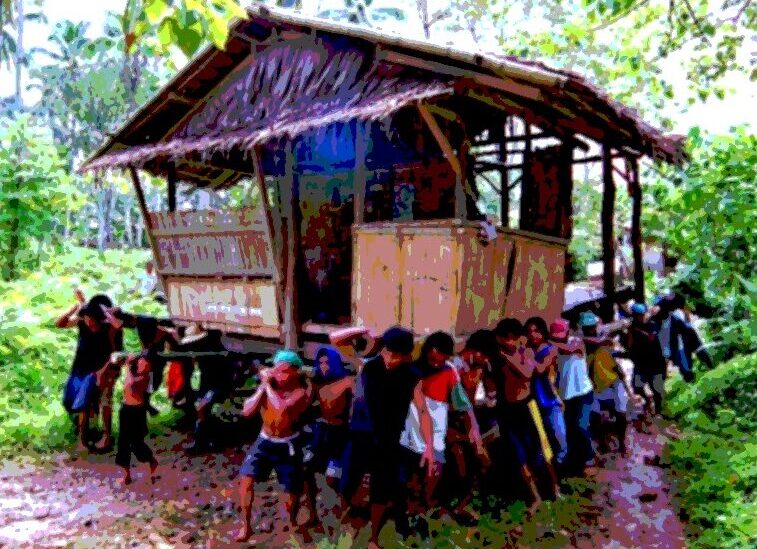
“Bayanihan” is a uniquely Filipino term, reflecting communal unity, collective action, and mutual support — values central to achieving Health for All. The theme for TUFH 2026 recognizes that as global health challenges become more complex and interconnected, the solutions must be systemic, inclusive, and rooted in the lived experiences of communities. These solutions must also be both resilient—able to withstand shocks and adapt to change—and responsive to evolving local needs and emerging global trends.
Rationale
The theme for TUFH 2026 recognizes that as global health challenges become more complex and interconnected, the solutions must be systemic, inclusive, and rooted in the lived experiences of communities.These solutions must also be both resilient—able to withstand shocks and adapt to change—and responsive to evolving local needs and emerging global trends.
1. Why “Health Systems”?
Past TUFH conferences have progressively evolved:
- TUFH 2020–2024 focused on community-based education, social accountability, interprofessional collaboration, and primary health care.
- TUFH 2025 started expanding toward systems-level thinking, highlighting access, disparities, and policy.
“Health systems” is the next natural step in this progression. It is broad enough to include and elevate community action, yet structured enough to facilitate policy and institutional transformation. Focusing onsystems also allows us to address:
- Health workforce development and retention in underserved (Remote and Rural, Indigenous, Migrants, etc.) communities
- Integration of Indigenous and intercultural knowledge
- Social accountability and governance
- Digital transformation and AI for health
- Cross-sectoral partnerships
- Disaster resilience and planetary health
Crucially, it enables conversations that bring together community voices, institutional leaders, and policymakers — aligning with TUFH’s vision of uniting the health ecosystem.
2. Why “Bayanihan”?
“Bayanihan” is a uniquely Filipino term, reflecting communal unity, collective action, and mutual support — values central to achieving Health for All. Using “Bayanihan” in the theme:
- Honors the cultural identity of the Philippines, host of TUFH 2026.
- Symbolizes global-local synergy: communities shaping systems, systems supporting communities.
- Encourages a shift from aid-driven to solidarity-based partnerships, a growing narrative in global health equity.
3. Philippines as a Living Case Study
The Philippines offers a powerful backdrop:
- A diverse archipelago facing challenges in access, disaster response, workforce migration, and local innovation.
- A place where indigenous healing, community-driven care, and national health policy intersect visibly.
- A chance to showcase how health systems can be co-created, especially in low-resource or climate-vulnerable settings.
4. Strategic Relevance
This theme is relevant and timely because it:
- Speaks to diverse audiences: educators, researchers, policymakers, health practitioners, and communities.
- Emphasizes resilience and responsiveness, which are both critical for sustainable health improvements.
- Enables tangible outcomes such as models, tools, partnerships, and policy innovations.
- Reinforces TUFH’s global leadership in social accountability, inclusive health systems, and community-engaged transformation.
SUBTHEMES
Community-Driven Health Systems: Strengthening Local Solutions for Sustainable Impact
Description:
This subtheme focuses on building resilient health systems through local leadership, community-academe partnerships, and bottom-up innovations. It emphasizes social accountability, place-based approaches, and culturally relevant strategies to ensure health services are responsive to the people they serve.
Rationale:
Reflecting the Filipino concept of Bayanihan — collective action for the common good — this subtheme promotes empowering communities to co-create sustainable health solutions. It builds on past TUFH themes of community engagement, education-service linkage, and equity.
It also captures key suggestions on building local infrastructure, social innovations, climate change and community-academe collaboration.
Equity by Design: Harnessing Technology, Data, and Innovation in Health & Education
Description:
This subtheme examines how innovations—such as artificial intelligence, digital health tools, data systems, and transformative education models—can be intentionally designed and implemented to reduce health inequities and empower underserved, remote, and complex populations. It highlights the importance of inclusive digital strategies that prioritize equity from the outset.
Rationale:
As technology evolves, it is critical to ensure these advancements serve those who have historically been left behind. This subtheme builds on community feedback calling for a focus on AI in health and education, tech for equity, and innovative approaches. It supports TUFH’s commitment to challenging assumptions, reimagining health and education systems, and promoting digital inclusion as part of socially accountable practice.
Strengthening the Global Health Workforce: Recruitment, Retention, Capacity-building, and Support in Underserved Communities
Description:
This subtheme addresses the urgent global challenge of healthcare workforce shortages and maldistribution. It explores policies and practices that support recruitment, training, retention, and wellbeing of health professionals, particularly in remote, rural, and underserved settings. It also emphasizes building skills and competencies tailored to the needs of underserved communities to ensure health professionals are equipped to deliver contextually relevant, community-based care.
Rationale:
Directly incorporating your focus on brain drain, upskilling, faculty-service alignment, and workforce wellness, this subtheme continues a core thread from previous TUFH conferences on building capacity for equity. It emphasizes the development of competencies and local capacity to serve underserved communities effectively. It also links local and global strategies for health workforce sustainability in alignment with Universal Health Coverage (UHC) and Primary Health Care (PHC) goals.
From Policy to Practice: Exploring Barriers and Enablers through Local Partnerships
Description:
This subtheme focuses on the real-world challenges and facilitators in translating health policies into effective, equitable, and sustainable action. It emphasizes the critical role of local partnerships — across government, academia, health systems, and communities — in adapting national or global policies to meet the needs of diverse and underserved populations. Presentations may explore implementation successes and failures, governance, financing, policy coherence, and community ownership.
Rationale:
While policy frameworks often define aspirations for equity and health system transformation, the gap between policy and implementation remains a global challenge. This subtheme highlights the importance of strong, localized partnerships as enablers of effective policy translation. It reflects several community suggestions on health financing, social and health policies, decolonizing approaches, and cross-sector collaboration. It also aligns with the Philippine context, where decentralized health governance and Universal Health Care reforms require adaptive, context-specific implementation. This subtheme encourages discussion on navigating barriers — from resource constraints to political will — and sharing innovative models for moving policy into meaningful practice.
Questions?
Please contact us with any questions or inquiries and we will respond as soon as possible.
Join Us!
Come unite with global health leaders, capturing their passion, and an ongoing commitment for global equitable health. Join the Network: TUFH as an institutional or individual member.
Register
Get Your Tickets!